ARC
Field Note
Muscle Memory Is the Wrong Goal
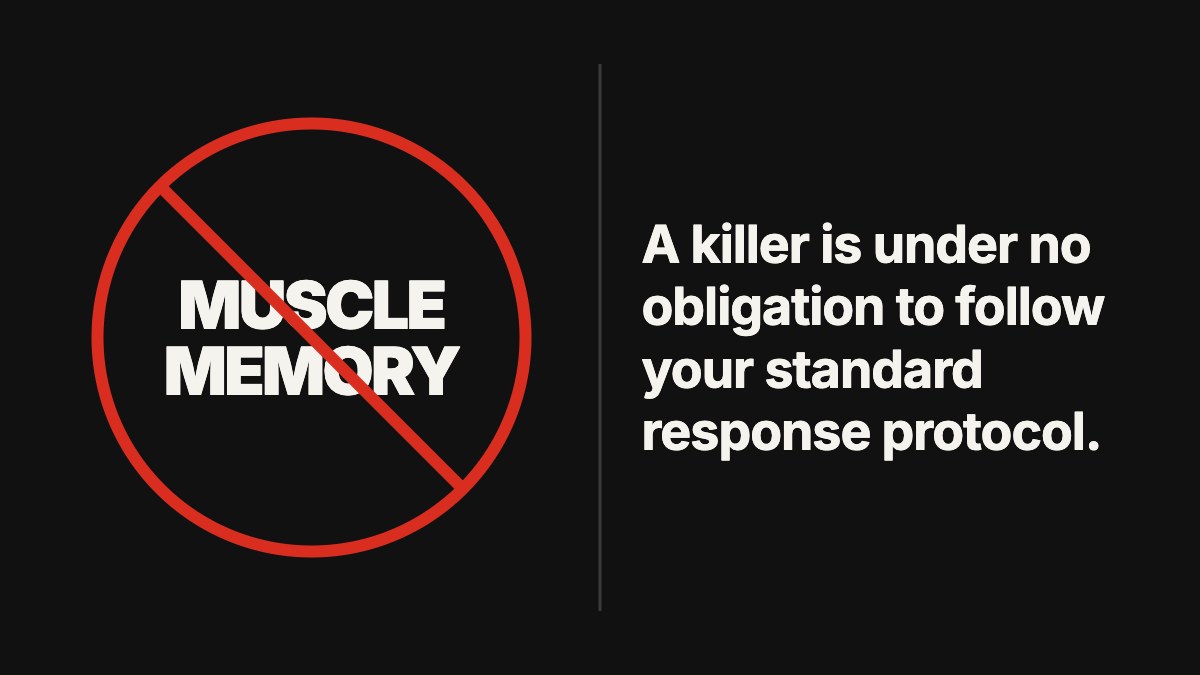
I keep seeing “muscle memory” as the goal of lockdown drills. It is stated like it’s a selling point. Muscle memory is the last thing you want in an emergency.
I get it. They want to make active killer response easy. But the complexity of the attack (location, time of day, etc.) is up to the killer. Muscle memory works when the world matches the rehearsal. Same place, same time, same intent. When the situation breaks from the script, the person who only has the script has nothing. Confidence goes first. Then panic fills the space where muscle memory was supposed to work.
An active killer is under no obligation to follow your standard response protocol.
The science behind this is the Yerkes-Dodson law. Performance rises with stress, up to a point, then falls off a cliff. Core causes of the crash? Lack of confidence and familiarity. A person running a muscle-memory-based script stays calm right up until the script fails. Then the surprise itself pushes stress past the peak, and performance collapses.
Think about what the drill actually teaches. A teacher who has been trained to herd kids into a corner and lock the door has one response. That works if the killer is down the hall and the door is locked. It does not work in the hallway. It does not work in the cafeteria, on the bus ramp, or on the practice field. And it may not even work in the classroom, if the threat is already inside.
That teacher isn’t prepared for an active killer. She’s prepared for a drill. And the kids follow her lead, so they’re only as prepared as she is.
So what should a drill build? The ability to assess the situation and apply the proper response (lockdown or evade). The ideal drill isn’t muscle memory. It’s an assessment of contact (direct or indirect) and location (ability to escape or secure).
An attacker won’t check the schedule. Teach people to assess first, then act on what they see. That’s not muscle memory. That’s training.
Calm is a skill. Train for it.
Related: Calm Is an Ability — why “remain calm” is a trainable skill with a physiological basis, and how ARC builds it without putting a classroom through simulated violence.